My mother’s name was Eshemu. She was a very rare ice bear, her fur adapted to the blue glaciers in our northern country. From a distance, my mother could give the illusion that she was the shadow of a cloud moving over the ice; when standing close to her, her blue gray fur softened the blinding white glare of the snow. In our earthly theology it was said that our beloved she-bear goddess Esh had such blue fur, which kept her invisible as she moved over the moon. We believed that during Umteesh—the beginning time of paradise when all bears lived on the moon with their creator mother—there was no aggression or predation. All bears ate nothing but Sheemtham—the divine sweet blueberries that Esh herself ate.
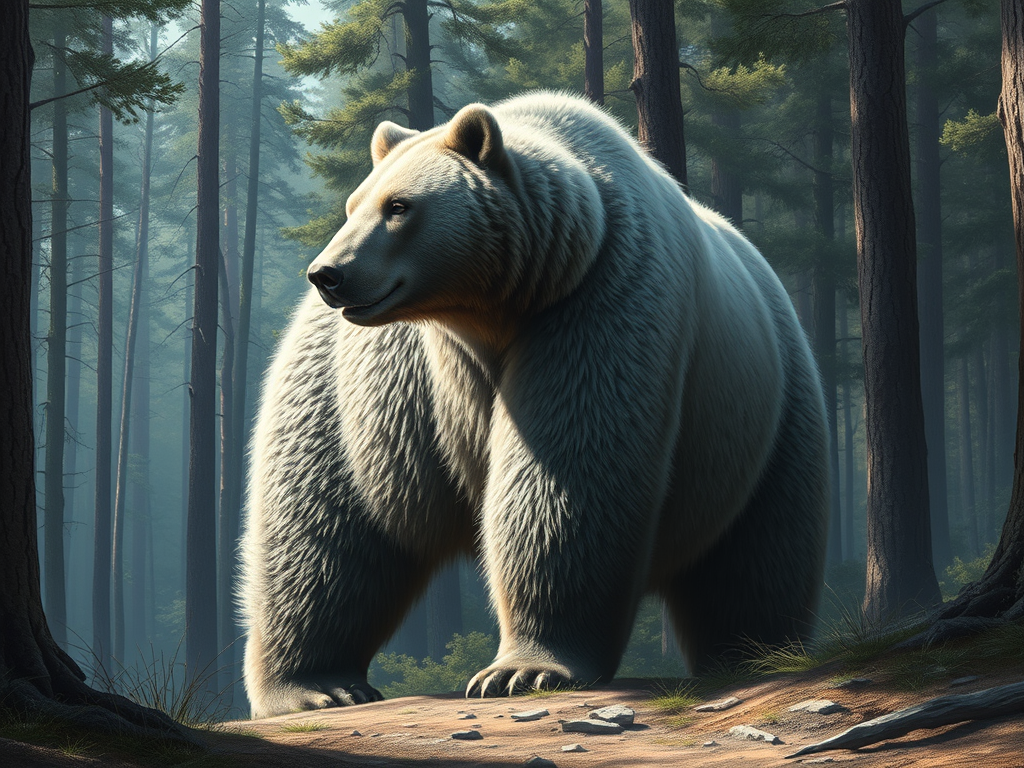
While some of our kind believed that Esh cast us all down to Earth after two bears harmed each other in a fight, most of us did not believe that our divine mother could be so punitive. We believed that she had noble reasons for sending us to Earth, and that the rare ice bears were specially chosen by Esh to be our spiritual caretakers. These bears were reminders to kill only when necessary for food, but were also symbols of Esh’s forgiveness for killing. An Esh bear like my mother was treated with the greatest reverence. To be a cub born to such a she-bear was a rare privilege, and entitled me to carry Esh’s name within my own.
In the spring of my mother’s third year she made a strange discovery. It had been a hard, snowy winter, and torrential rains came late in the spring. One morning soon after emerging from her hibernation, my mother noticed what she thought at first were logs at the head of one of the streams which cut across the plain. She thought they had been released by the glacier with the heavy rains. Only after a day did she realize they were really bones, each one bigger than even the great mammoths. What kind of creature could possess such bones? Did they live on the other side of the giant glacier? My mother so wanted to travel to the country on the far side of the glacier, but she always had cubs to care for, and so never did. She brought the mammoths to see the bones, but no one knew what to make of them, so they remained an unresolved mystery.
On the night she left me, my mother ran north into the woods, her voice roaring with a grief that filled the entire forest. None of the other creatures ran away from her in fear—they knew why she was running alone, and understood the pain in her voice. They heard my plaintive, disbelieving yelps, which gradually become louder and louder howls of anguish. Mother, this cannot be happening, I was saying. Eshemu ran until she finally reached the edge of the forest and stood before the vast sandy plain dotted with stunted pine trees and cut through by many streams flowing down out of the glacier. Her aching limbs and burning lungs were nothing compared to the wrenching pain in her heart.
My mother crossed all of the streams until she reached the large meadow that marks the end of the plain and the beginning of more forest. There was still much snow in the meadow, but already she could see tender new shoots poking through the wet earth, and she knew that soon the meadow would be glowing with goldenrod, dandelions, and fireweed. ‘Oh, how Ushesh loves the fireweed!’ She thought while she rested for a while at the edge of the small lake in the meadow, watching the silhouettes of the sleeping swans floating with their heads curled under their wings.
The woods on the far side of the plain climbed steeply upward and were strewn with giant boulders long ago cast aside by the glacier. When my mother first brought me here I felt like we were navigating through a great stone and earthen maze filled with the eerie shadows of leaves and branches swaying in the easterly wind coming off of the ice. As she was an old bear my mother had trouble seeing, but she knew from memory where to find the switchbacks leading up the slope. She climbed until the terrain finally flattened out and she could feel the immensity of the glacier.
My mother’s destination was a large, high rock with one side driven into the earth. She climbed up the embankment and began digging, her claws making fast work of the accumulated icy snow and soon exposing the rock’s polished, concave surface, which was as smooth as newly formed ice on a pond. But it was not the glacier that polished this rock, it was created by countless generations of bears. The rock had an ancestral, matriarchal lineage—my mother brought all of her cubs here, as her own mother once brought her.
As morning’s pink light filled the sky my mother settled into the shallow depression and felt the ice cold rock soothing her aching body. She felt her declining physical stamina, and thought that the coming summer would likely be her last in life. As an Esh bear she had always been treated with the greatest respect, but she felt the pain of her separation from me, and wanted to wallow in her sadness. My mother remembered the happiness we had shared whenever she related some of the Esh stories to me. She knew that the tales of Esh had come more alive in me than in any of her other cubs, and knew the abandonment I was feeling by her telling me that these stories were not literally true.
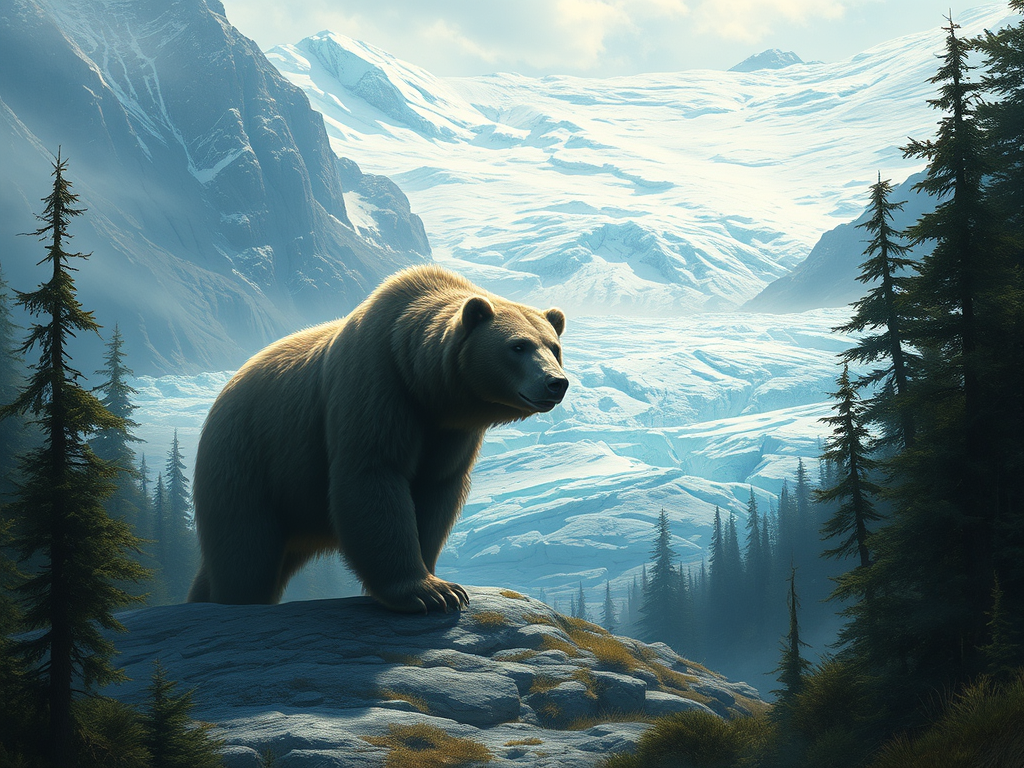
Even when her eyes were young and healthy, my mother Eshemu could barely discern the forested country on the other side of the ice, so vast was the glacier before her. But she could still see the sun rising over that country, and could see the air above the ice shimmering as it received the first warming rays of the morning. With the morning sun upon her head my mother fell deeply asleep. She was awakened by the sound of a cheerful, warbling voice, then to a small flock of such voices. The little singing birds had returned for the summer!
It was in this contented moment that my mother first caught the frightening scent coming from the far side of the glacier, and it was then that she finally understood the mystery of the giant bones she had discovered when she was young. Surrounded by the buoyant music of the birds, Eshemu comprehended the reality of extinction, not merely of individual lives, but of entire forms of life. She knew that one day soon a dark and fearsome change would come across the glacier from the East and bring an end to the world she had known. She knew these new creatures with the strange scent were life’s future, and that her own kind, and all the creatures she had known, were the past. What terrible portents to come at the end of her life … What is life’s mystery so blindly searching for that demanded so much death and pain? My mother wondered if the answers to her questions were hopelessly, eternally hidden. Later that summer, when I had grown used to being on my own, she asked me to travel to the country on the far side of the glacier.
When my mother and I parted that fall for our winter hibernation I did not think I would see her again. Her body was weak and I saw that she had received visions filled with dark and distressing premonitions that she was not ready to share with me. So I was astonished the following spring to see that my mother had survived the winter, but the fur on her face and chest had become completely gray, her eyes were completely clouded by cataracts, and her movements were slow and labored. She seemed not to have fully emerged from the torpor of hibernation, and I knew that her death was imminent. My mother spent these last days lying in the sun amongst the fireweed and spring flowers at the edge of our lake. She listened to all the birds singing, and could see the elegant swans on the water if they paddled close enough to shore.
On what would turn out to be the last night her life my mother asked me to stay with her. She said she had one last story to tell me, and though her voice was very weak it still radiated the tender love I had always known. My mother told me that during her first hibernation alone, away from her own mother, she was visited by a dream that contained a blinding and terrifying light. Within the light she heard the death throes of all the animals she had killed and eaten that summer while trying to survive on her own. She thought these animals and the goddess Esh were telling her that she had not tried hard enough to scavenge for food, that the light was a revengeful rage which would devour her as she had devoured the flesh of her fellow creatures.
Although my mother had dreaded her fall hibernation and reclusion from the world, this dream made her feel she did not want to return to the cruelty of earthly life. But she knew that as an Esh bear she was a powerful symbol of Esh’s reminder to kill only for sustenance and of her forgiveness for those times when we had to kill other creatures. So in the spring she reluctantly returned to the world and tried to be a positive example for all our kind. She gave thanks in her heart for the life that every creature brought to her, and during her hibernation the following winter she noticed a great change in her dream—in the blinding light she still heard the anguished voices of death, but she also felt the compassion and forgiveness of these souls.
It was after the second visitation of this dream that my mother truly felt like an Esh bear. She told me that earthly life is full of so many cruel abandonments, that I would never cease to feel the pain of these cruelties and that sometimes I might feel without any comfort or hope. My mother reminded me that I must always be careful not to abandon my true self, that I must always search for and live by the spirit of Esh. Then she said, ‘You are hungry, my Ushesh. You must go now.’ My mother’s eyes closed and her head dropped onto her legs as her life expired. I pressed my head against her chest, but could no longer feel the thumping of her giant heart.
I lay next to my mother in this way for a long time, quietly reciting the eulogy prayer to Esh until the first azure light of dawn appeared in the sky. True to my mother’s last words, I felt the importunate, incongruous cries of my stomach roaring for food. I did not want to leave, but knew I had to relinquish my mother’s body to the cycle of life. I wandered far to the west, where I fished in a river until midday before heading northeast toward the maternal rock that overlooked the glacier. I did not want to return to the lake for many days, until I was certain that my mother’s body had been consumed, but as I crossed the plain I suddenly caught the frightening scent I remembered from the previous summer—I knew the Aathsha had arrived in our valley.
Without any thought I ran back to the lake and saw a group of ten Aathsha gathered around my mother. They had thrown many spears into her chest to make sure that she was really dead, and had carefully carved away the blue gray fur from her back and hindquarters. They did not even eat her flesh—it seemed to be her fur that they wanted. To see my mother, an Esh bear, treated so cruelly became a wound that I carried for the rest of my life; it seemed so senseless to me, and I was filled with a terrible rage.
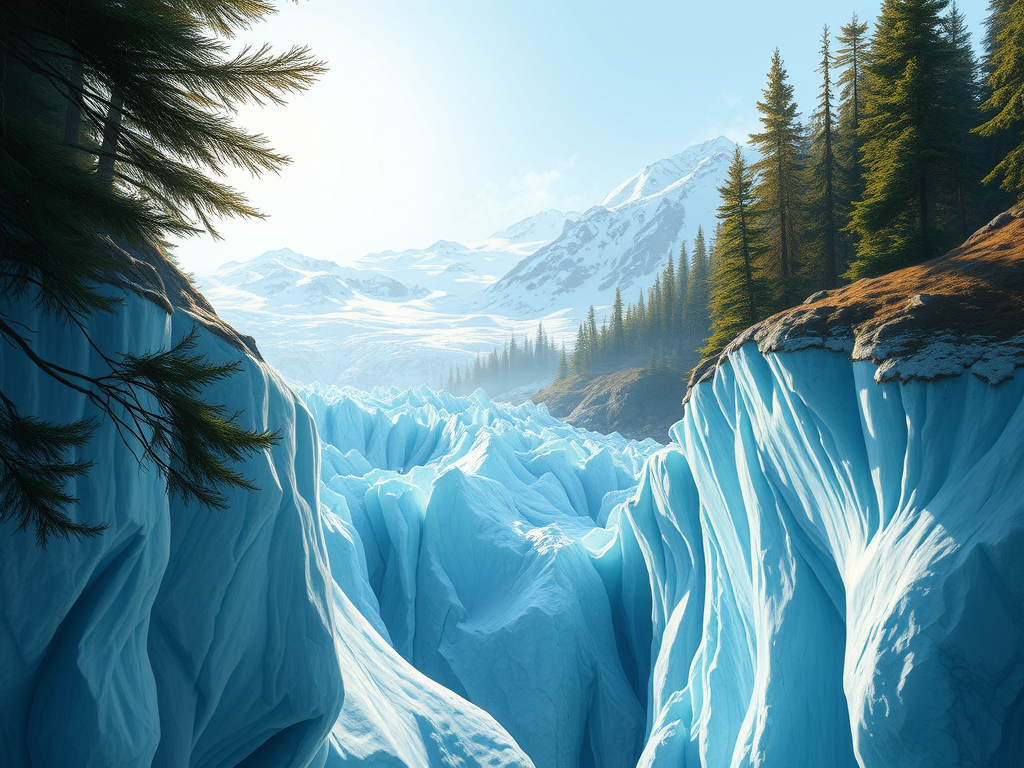
As they were retrieving their spears from my mother’s body I roared with a loud, angry voice I had never experienced before and charged at the Aathsha. They were too startled to throw their weapons as I grabbed the fur in my mouth and ran away. I dragged my mother’s blue fur onto the glacier and dropped it into a deep crack in the ice, which seemed a safe and fitting burial place for such sacred flesh.
From the slope of the glacier I could see the Aathsha moving south, and I sensed they would not return, but as I climbed back into the woods and stretched out upon my mother’s rock I felt equally certain that one day soon more of these strange two-legged immigrants would arrive into the valley that was my home. I knew that my world would never be the same as I had known it with my mother, and felt I understood the sadness and foreboding that she had felt at the end of her life. I tried to see the Aathsha through the spirit of the Esh stories, to tell myself that they were fellow suffering creatures trying to make their way through the world, but the image of my mother’s desecrated body filled me with such grief and anger. I would struggle with this anger for the rest of my life.
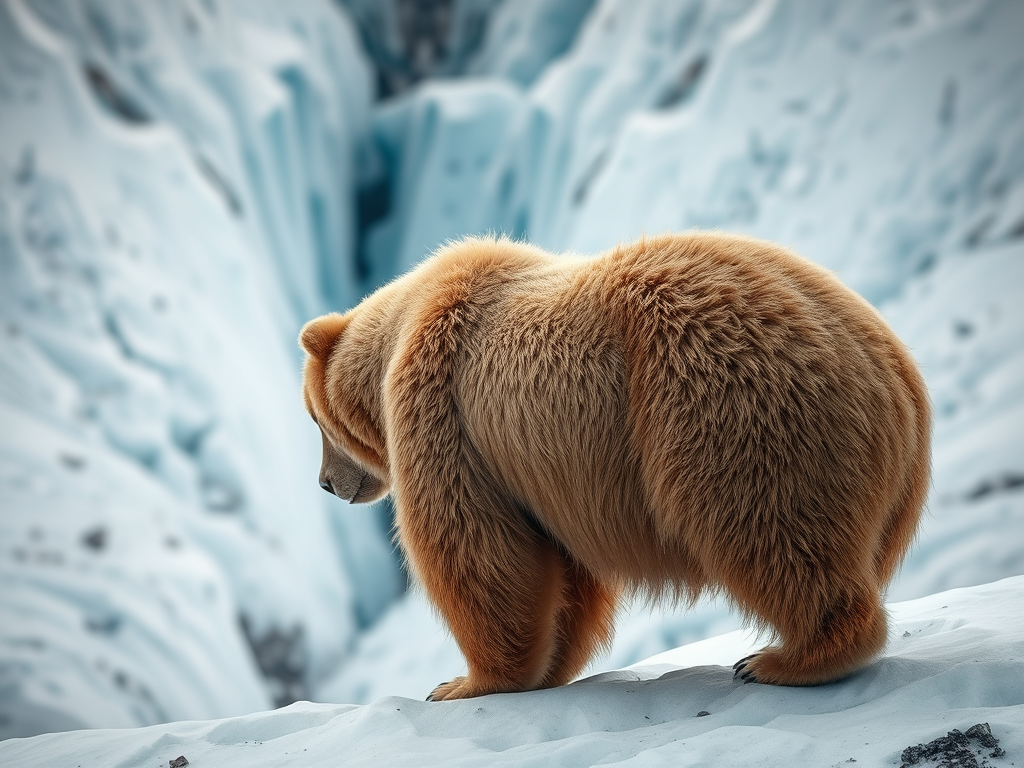
It was not until my tenth spring of life before another Esh bear arrived into my world. Her name was Eshathu, and she was the granddaughter of my mother’s first daughter. I tried to keep a respectful distance, but her blue brown fur was so dazzling to gaze upon. Two years later, after her first hibernation alone, Eshathu came to me. She had seen the same white light my mother had experienced, and heard the same voices of all the animals we bears had killed, but gradually one voice had emerged from all the others, the anguished voice of an old she-bear.
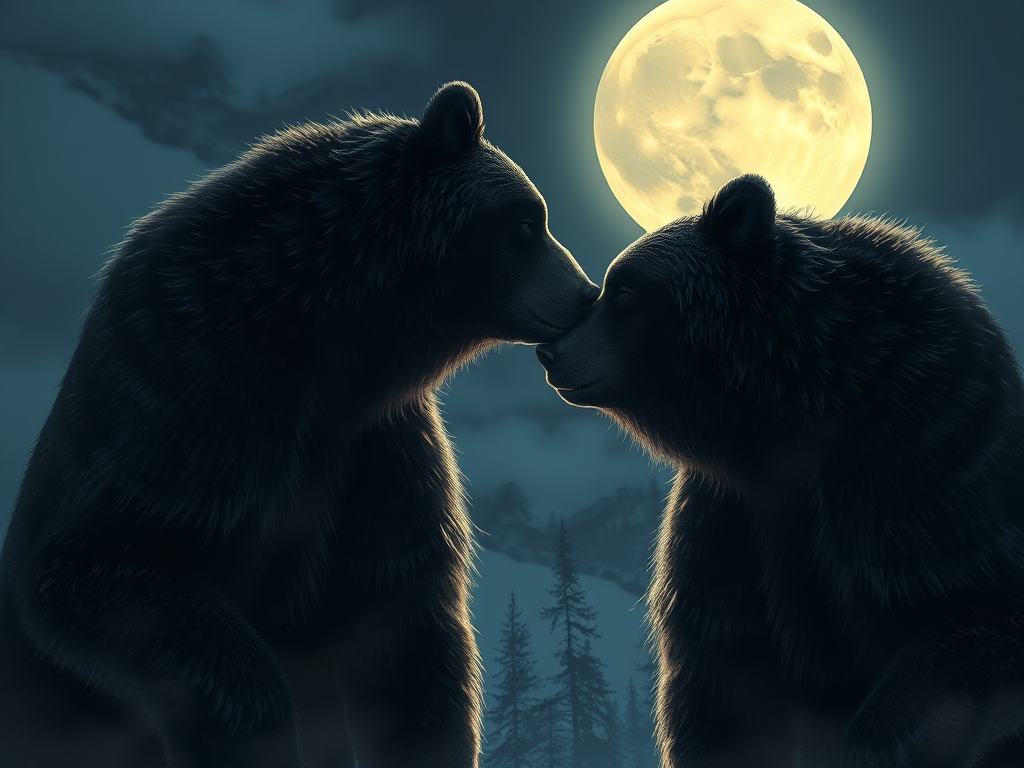
As if she were that bear, Eshathu had felt herself running as fast as she could through the forest, her lungs and legs burning with the effort. The wind was warm, and the long shadows of the trees were cast across the forest floor by the moonlight. She roared with the grief she was feeling over having to separate from her cub, and heard the wails of that cub as he tried for a short time to follow his mother. Eshathu was overwhelmed by the deep love this bear felt for her cub, a love stronger than any she had ever experienced; the cub’s name was Ushesh. Eshathu slowly realized that in this winter dream she had been the previous Esh bear—my mother—and when she climbed out of her den that spring she felt for the first time that she was also an Esh bear.
Eshathu asked me what the woods and the valley had been like before the arrival of the Aathsha. I was twelve years old then, and there were very few of our kind who had any memories of the before time. I told Eshathu of the first time my mother had taken me to see the giant bones that had washed out of the glacier when she was young. I remembered the sparkle of mystery and wonder in my mother’s eyes as she told me of discovering these bones, of the possibility that strange and wonderful creatures might live on the far side of the glacier. It was the same delight I had always heard in my mother’s voice when she told me the old stories of Esh. As brutal and cruel as I knew the predatory life to be, I told Eshathu that I felt an innocence and wonder in my memories of the before time.
Many times in my earthly life I was awakened from my long winter hibernation by the birds passing overhead, returning to their summer nesting grounds in the north. There were many springs when I awoke feeling as if I were floating through the air, gently rising and falling with the breathing of the wind. Slowly I would realize the dreamy illusion—that it was not I who was moving, but the steady fluttering of so many wings rippling through the air. The swans, geese, and ducks were always the first to come, some taking up residence upon our lake. In some years there were so many of these birds that they obscured the sun during the day and the moon at night. The swans conveyed such tranquility as they paddled across the water in their stately manner, their long necks arched so gracefully.
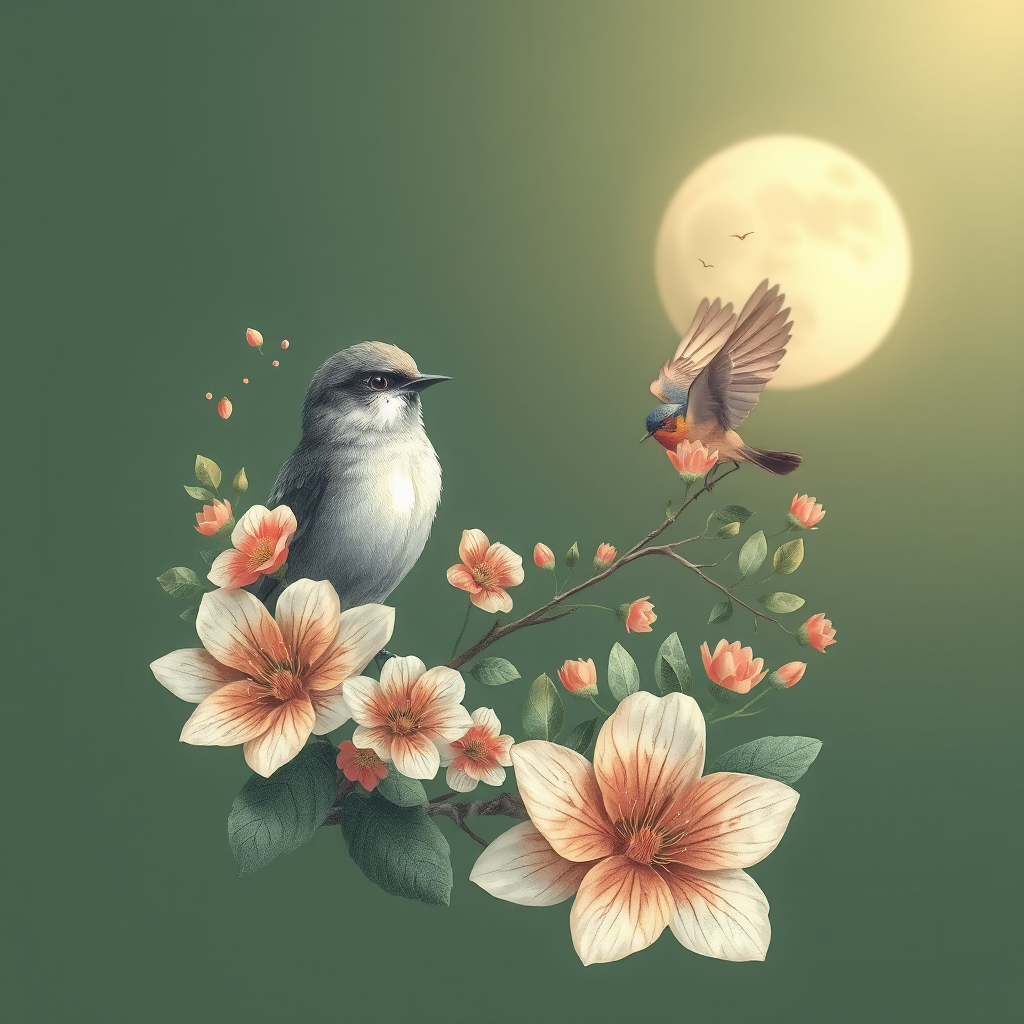
The last migrants to return were the small singing birds with all the colors of the rainbow in their feathers. I adored these effervescent creatures; sometimes one or two or even a little flock would land upon my back and warble their cheerful melodies as they dined upon the clouds of insects that swarmed around me. When I had to submerge myself in the lake to escape the relentless attacks of the biting insects I would wonder how the universe could have simultaneously created such hideous annoyances alongside such beautiful birds. Sometimes the little birds would loudly scold me from the branch of a tree, and I would know that I was trampling too closely to a nest. And of course I was always sad when these birds departed, for I knew that I would soon have to begin my long winter recluse.
The wounds of the body are dissolved at death, my friends, but the life of the psyche—both darkness and light—continues eternally in the unconscious. When I realized that the death of my own body was at hand, and relinquished myself to that death … Well, in that moment of surrender I felt the same pure, maternal compassion I had received from my mother when I was a cub, and realized the infinite, universal nature of that love. This was the same immeasurable love I had imagined, when I was very young, to emanate from our she-bear creator goddess Esh. So, my understanding of Esh expanded in my death.
Yet like so many creatures who experienced the earliest expansions of your species, I also carried with me at the end of my life a dark pessimism and foreboding about you humans. This shadow did not disappear with the death of my body, but was magnified by the intense luminosity of the love that I perceived. All of the paradox and tragedy of mortal, earthly life seemed to be as inexplicable as ever. How could this primordial mother love have created the ruthless driving force of the predatory instinct, the brutal, unremitting competition between all forms of life, the slow appearance and extinguishing of so many creatures? How could such love create one species that seems so devoted to the annihilation of all others? Will the noble white bears who inherited the country my mother and I once inhabited survive the melting of their world? So much of the Earth’s wild pageantry has already been lost. Is this the intended final outcome of life’s experiment—a sterile world of only Aathsha and their machines? Have we animals been nothing more than transient stepping stones in Mother Nature’s tinkering? Or is all earthly life fighting against an inescapable fate?
The will to live often seems like the most inexplicable, inconvenient, and irksome force in the universe. In another billion or so years the sun will become so hot as to scorch the Earth and evaporate all the oceans, bringing the mysterious experiment of life to an end. Yet despite the feelings of futility and the finite, tragic mortality of life, the feeling of primordial mother’s love endures. I can only say that it is this feeling that must endure, the feeling that I experienced in relinquishing my body to death.
Thank you for reading my memoir, my friends.
 Haumanu Speaks/PoetiCalli