What is the earliest big dream you can remember having in your life? By “big” I mean a dream that left behind very vivid images and powerful feelings of connection to mystery. I may be odd in this respect, but this has always been an easy question for me to answer. I can place the dream quite precisely in time because of a geographical move my family made, which was a big psychic event for me. I couldn’t have been more than 6 or 7 years old.
This is the dream, related in the present tense:
I am riding in a car with my parents, along a narrow road that winds through a vast forest. The trees are unusually tall, the tallest trees I have ever seen. Eventually we come upon a small cabin on the left side of the road. I see a sign advertising horse rides.
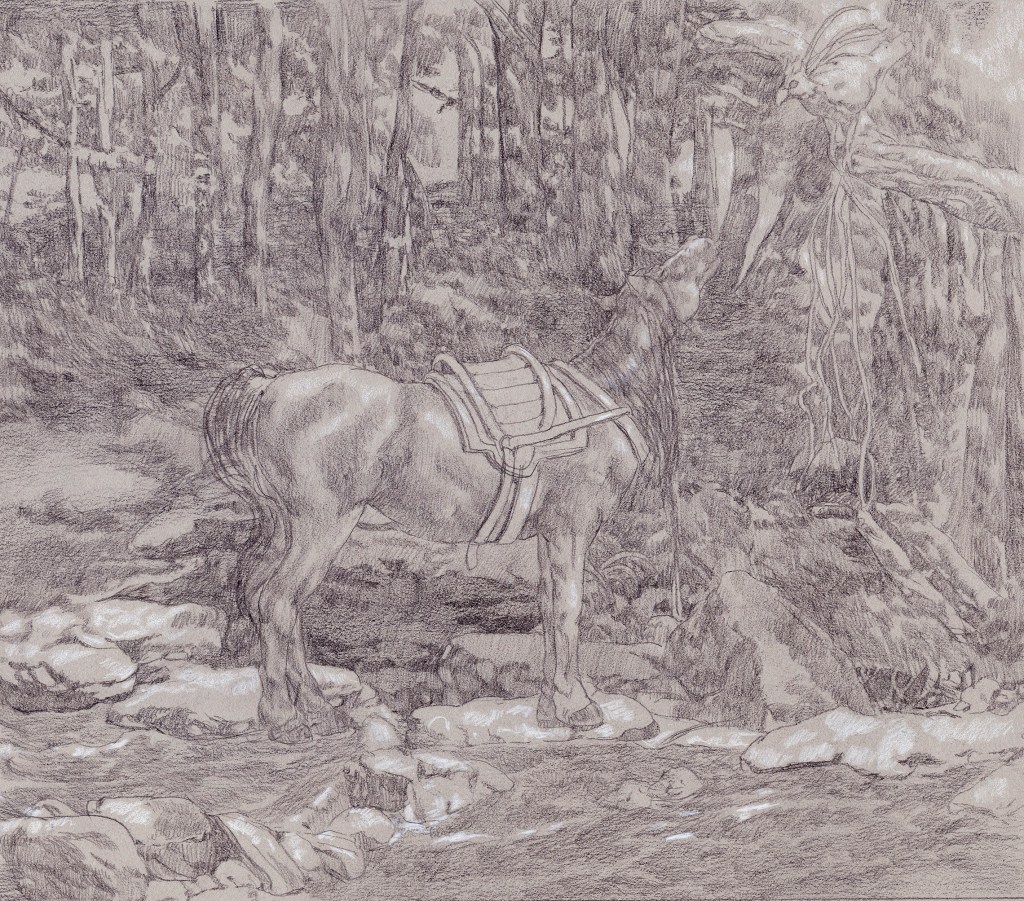
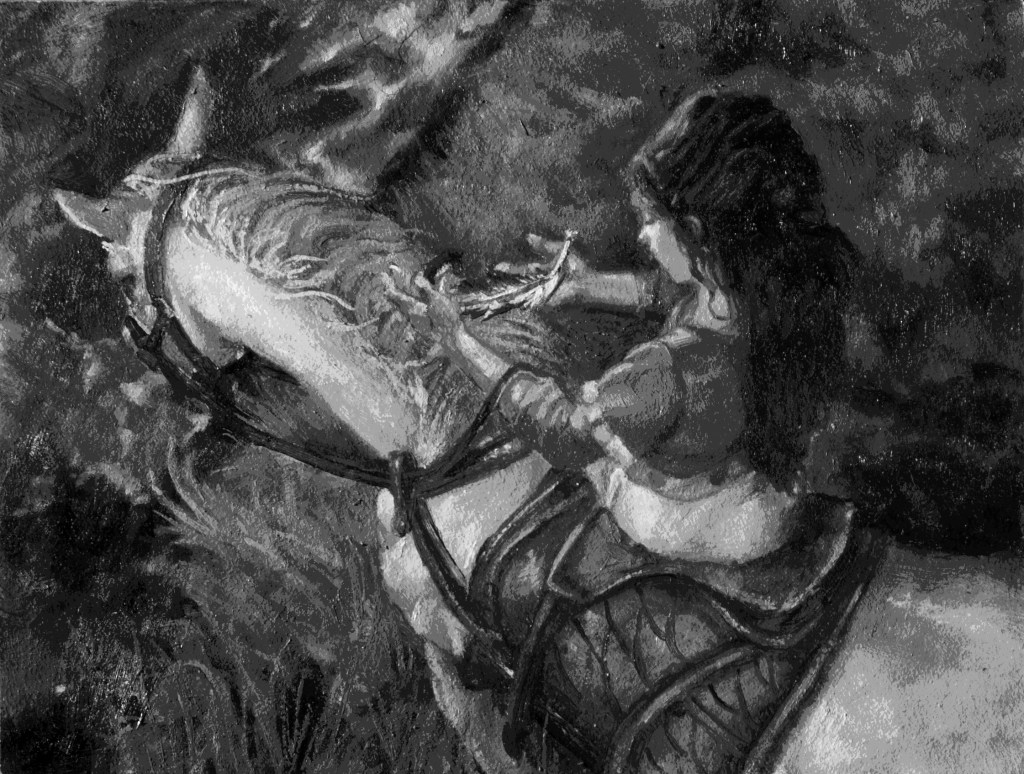
As we pull into the yard in front of the cabin an old man comes out to greet us and I see a beautiful palomino horse tethered to a tree. Like the trees the horse is unusually tall, so tall that I have to climb up a long ladder to reach the horse’s back. I feel happy and excited as the golden horse begins walking in a counterclockwise direction around the tall tree. After a long while I finally feel tired and want to stop, but when I look down into the yard I see that the old man, my parents and the car are all gone. Feeling bereft and confused, I am alone and stranded upon the horse.
As I grew older it never seemed strange to me that I remembered this dream or continued to ponder the images. Horses were entirely magical creatures for me as a child (they still are), so the presence of this luminous golden horse felt completely natural. But I always wondered why I would recall this dream. Why did it feel so mysterious? Why was I so drawn to this mystery? What was it telling me?
I was in my thirties when I had the idea that perhaps my dream had been prophetic in some way. By the time I was fifteen my father was gone and my mother was seriously ill. Sadly, I didn’t understand then that she was dying; it simply was not a reality I could take in. After college, trying to escape all the troubles, I moved west to California, home of the very tall redwood trees.
I liked my prophetic interpretation of my dream, and this is mostly where my thinking rested until late summer of 2023, when the dream resurfaced with a lot of energy that felt somehow new. I couldn’t decipher what this energy was telling me, but the images of the dream now made me feel like I was inhabiting a fairy tale, albeit an unfinished fairy tale. What happens next to this little girl stranded atop the giant horse? When I related the dream to a Jungian psychologist I stressed the feeling of being in a fairy tale; she seemed as fascinated by the dream story as I have always been and asked the same question of what my little girl self does next. “Maybe you should try creating a fairy tale out of this dream,” she said. Her tone was so enthusiastic and playful, as though my writing a fairy tale was entirely possible.
Carl Jung took dreams and fairy tales seriously as direct expressions of archetypal content from the unconscious. While dreams are reflections of the individual personality of the dreamer, fairy tales present us with archetypal energies in their more universal form.
The theme of the young feminine psyche trying to awaken and define itself runs through the classic tales of Cinderella, Snow White, and the Sleeping Beauty. And in all of these stories it is the evil witch, stepmother or queen who sets in motion the path to psychological wholeness. This archetype of the “dark feminine,” the old woman filled with bitterness and/or jealousy, runs through many ancient myths. The Sumerian myth of the goddess Inana who descends into the underworld to confront her dark sister Ereshkigal is a good example. In the tale of Snow White, the mirror on the wall symbolically offers the jealous, narcissistic queen the chance to see her own anger and bitterness, the chance to set aside the darkness and welcome more positive energies from the unconscious, but she cannot or will not do so.
In all of these stories it is of course—on the surface of things—the handsome prince who comes and rescues the young heroines. As tempting as it may be to impose a modern feminist ethos on these tales, to say ‘Hey, these women don’t need husbands to individuate!’, to do so is to miss the deeper psychological truths these fairy tales embody. The human psyche exists as a dynamic and delicate balance of opposing forces. Whatever one’s gender identity, it remains true that the energies we call male and female are one of the most powerful pairs of opposites we have to contend with in our lives.
In Tchaikovsky’s musical score for the Sleeping Beauty ballet, the scene in which the Prince comes upon Princess Aurora’s entire kingdom trapped under a spell of slumber is accompanied by a lone cello. The music is melancholy and haunting but also very tender and searching—the Prince needs the awakening of feminine energy within himself as much as the Princess needs him.
This quest for psychological wholeness runs through so many of the classic fairy tales. No matter how old we are, these stories fascinate us because they activate powerful archetypal forces in the collective unconscious. As the word suggests, these forces are both typical and archaic, as much as part of our genetic and evolutionary past as bones, skin and phylogeny. The search for unity, wholeness and individuation is the work of a lifetime; it is the hero’s quest.
With the tall trees and the tall horse, my childhood dream bears some similarities to the tale of Jack and the Beanstalk. Perhaps I had heard this story not long before my dream, or perhaps my dream reflected the same archetypal forces. At the beginning of the story Jack’s impoverished mother orders him to take the family milk cow to the market and sell her for no less than five gold coins. But on the way to the market Jack encounters the mysterious old man who offers him five magic beans for the cow. Whether he makes the decision consciously or not, Jack takes the beans—he eschews the ordinary for the magical, and the family’s fortunes begin to improve.
The opposing energies I’ve probably struggled with the most in my life are in fact the mundane and the magical—the mundane, ordinary need to secure food, shelter, and enough resources to keep the body going, and the demands of the inner, spiritual, imaginative life. As far back as I can remember I was a fearful child; it is still very hard for me to push myself out into the world to try new things.
My father was an introvert, slightly given to obsessiveness, but very socially adept in his quiet way. I inherited my father’s core temperament with the introversion and obsessiveness greatly amplified, and without the social acuity. I think my father saw a lot of himself in me, and was able to simply let me be me, but he grew more and more silent, began behaving badly, and then left. He lost all credibility with me at a young age.
My mother was an extrovert. She navigated easily through any social situation and drew great energy from the social world. My mother was a warm and wonderful person, but she saw my introversion and social struggles as things that should and could be challenged and overcome. That was the collective culture at the time. I can remember so many moments when I saw that my Mom didn’t understand me and I instantly retreated into silence. The word neurodivergent didn’t exist when I was a child, and I thought it was best to keep my divergence hidden and secret.
When I look at my childhood dream now, at the image of my young self stranded atop the tall horse, I can’t imagine a more perfect image of my situation. I see how lost I was within my parents’ dysfunction—a tension that I perceived almost as far back as I can recall, how confused I was about my own unusual temperament, my neurodivergence, I see how hard it was for me to embrace and validate who I was.
After my Mom died I went out into the world and tried hard to be the practical minded person I thought she wanted me to be, but this effort required me to relentlessly subvert and override my true self. I continued in this way for years, until my mind and body broke down, until I simply couldn’t do it anymore.
After I found my way to a Jungian therapist my dreams, as though making up for so much lost time, began coming in torrents—big, epic, powerful dreams which I diligently recorded in writing. As I did this I quickly realized that there was so much nuance of emotion and image in each dream. How do I describe all these things in words?
Animals of all kinds were very frequent symbols in these dreams, and it was easy (at least for my therapist) to see why. Animals live naturally and spontaneously by their instincts, while we humans are so often getting in the way of ourselves. Any kind of psychological trauma, particularly trauma experienced in childhood, is likely to damage the ability to know and trust one’s instincts. The psyche possesses powerful defense mechanisms that mobilize to prevent the young person from suffering further trauma, and these mechanisms tend to derange instinctual living.
Not every person will be helped by every form of therapy, but Jung’s psychology of the unconscious worked for me. Like Jack climbing up the giant beanstalk I slowly climbed back onto my golden dream horse, untethered it from the tree, and allowed myself to inhabit and value the magic of the inner life. I delved deeply into Jung’s collected written works, and gradually noticed that recording my dreams was evolving into the desire to write stories. I became a writer.
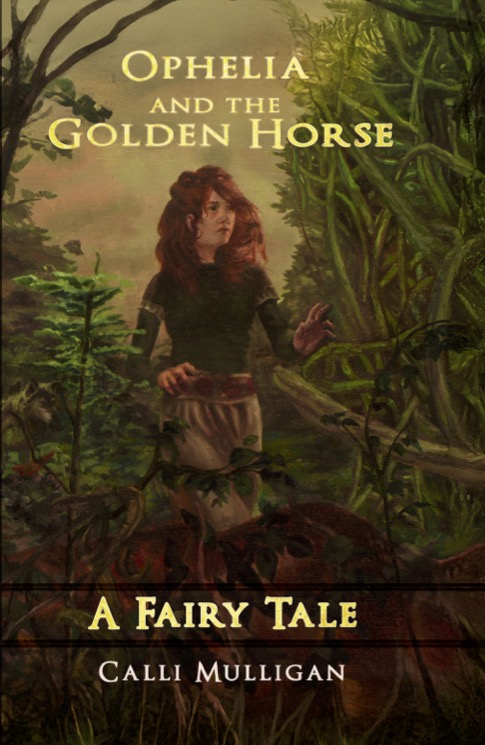
Did I write my own fairy tale? Yes, and the book is finally up and running on Amazon. Ophelia and the Golden Horse is a short story/novella, and I offer it for free this week, Feb. 9 through the 13th.
 Haumanu Speaks/PoetiCalli