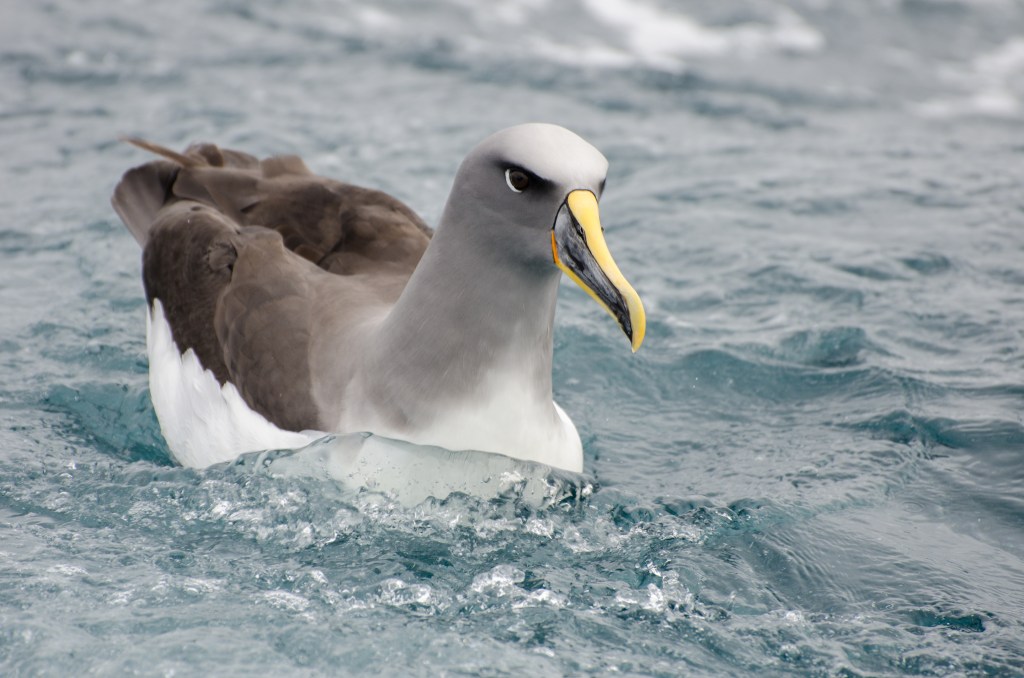
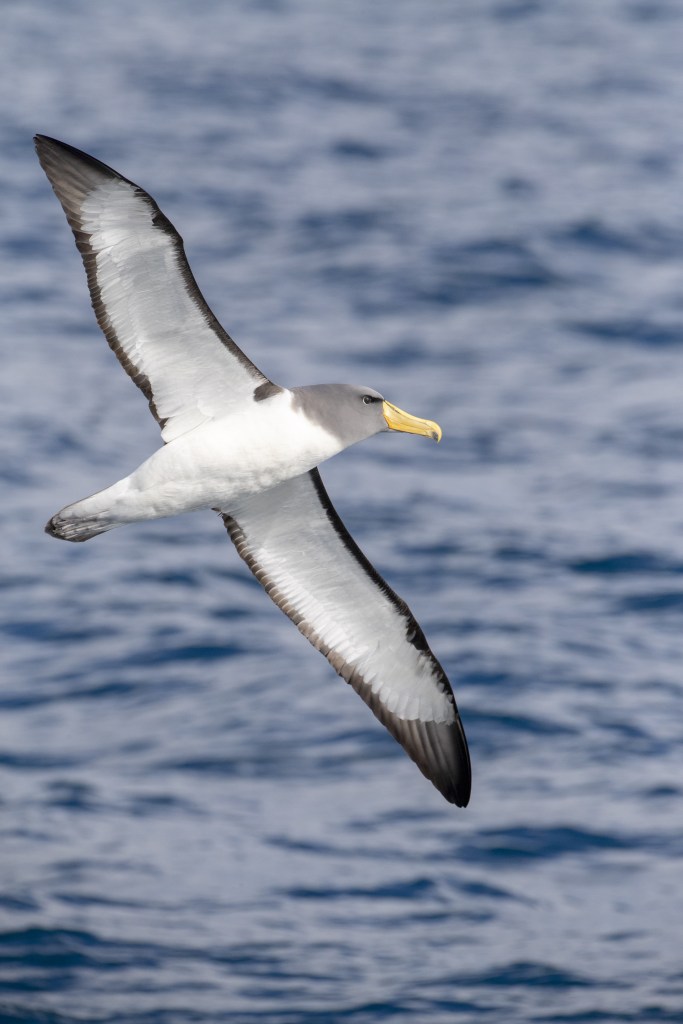
These handsome seabirds, so named for the Chatham islands east of New Zealand, are medium sized albatrosses with wingspans of about 9 feet and body length from tip to tail of about 3 feet. When not nesting, these birds forage over the entire south Pacific ocean from Australia all the way east to Peru and Chile.

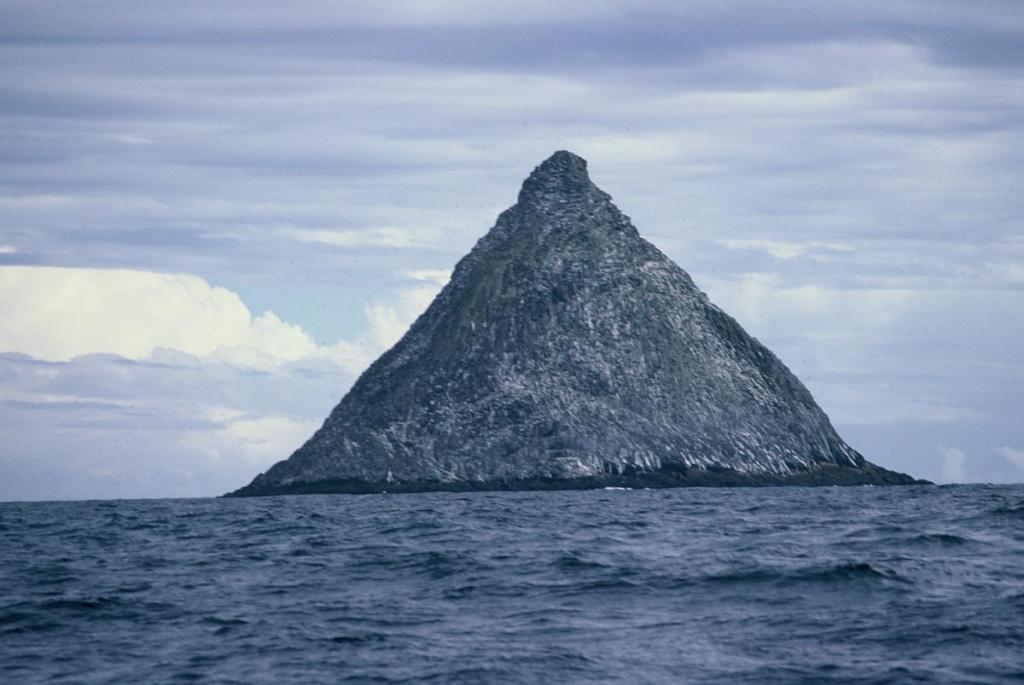
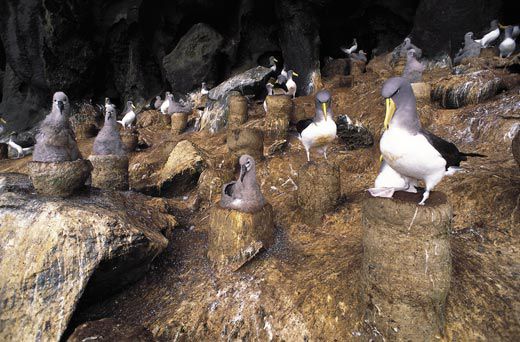
Until very recently, the entire global population of Chatham albatrosses (~5,300 adult breeding pairs) nested on one tiny rock islet known as the pyramid, about 50km south of the Chatham Islands. Near the top of the pyramid is a small cave in which some of the birds build their mud and grass pedestal nests, but most pairs nest on the slopes of this rock crag. Over time, however, storms have eroded much of the grass and mud the birds need for nest building. This problem has accelerated as climate change produces more powerful storms, so biologists with the Taiko Trust have installed artificial nest pedestals on the pyramid, which the birds do use.
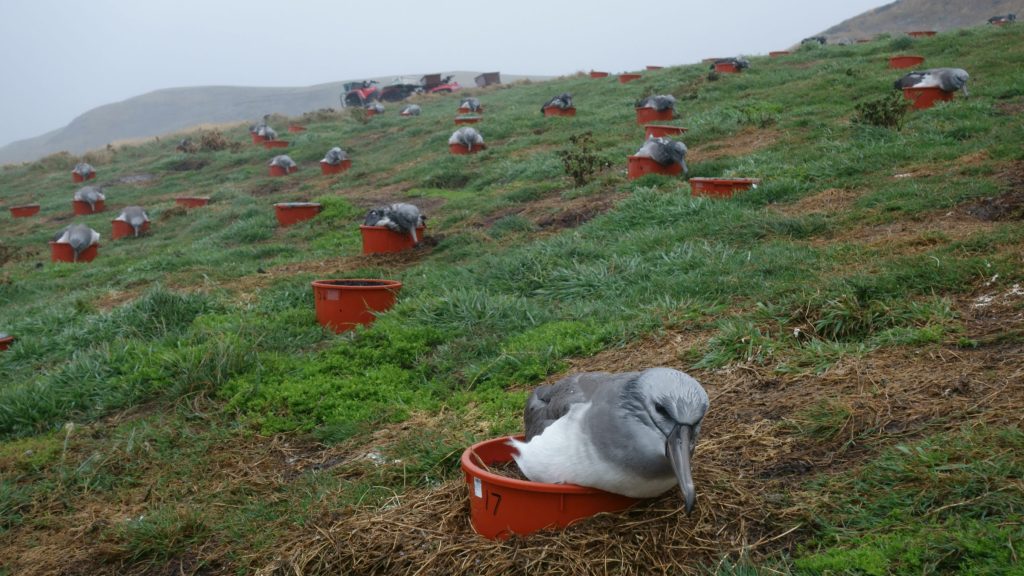
In 2014, as an additional safeguard against a worsening climate future, biologists embarked upon an ambitious project of relocating 300 chicks from the pyramid to South Chatham Island, in the hopes of coaxing the birds into establishing a second breeding colony. The chicks are set up on artificial nests and hand fed a yummy mixture of squid and fish. So far the project has been very successful – nearly all the chicks have survived and fledged. It will be interesting in the years to come to see how many of these chicks return to South Chatham as adults to choose mates and nest.
Seabird populations are declining faster than any other group of birds. All 23 species of albatross face the threat of falling victim as bycatch to commercial fishing boats. Illegal fishing is BIG business and a huge problem for albatrosses. The second biggest threat is degradation of nesting islands by climate change, rising sea levels, and introduced invasive species. These giant, majestic seabirds, who regard us humans with such poignant lack of fear, are true sentinels informing us about the health of our oceans and our planet. We owe them the dignity of trying hard to heed their warnings.
A fun footnote: Part of what defines an albatross as an albatross are the two slender tubes at the base of the upper bill (seen here on a wandering albatross):

As pelagic birds who come to shore only to nest, albatrosses must be able to drink seawater and yet maintain their blood salt concentration at 2%. A gland behind the birds’ eyes removes salt from the blood and concentrates it into a 5% saline solution, which is then secreted through the “tube-nose.” While some sea and shorebirds like gulls secrete excess salt through their mouths, in albatrosses and petrels the salt solution is secreted through the tubes on the nose. This adaptation may help keep the salt out of the birds’ eyes while they soar across the ocean. The saline solution also contains the metabolic breakdown products from digested squid and fish, which often stain the neck feathers pink, as seen below on another wandering albatross. Pretty amazing, huh?

 Haumanu Speaks/PoetiCalli